Short Summary of Research Activities (as of 2011)
Lydia E. Kavraki is the Noah Harding Professor of Computer Science, professor of Bioengineering, professor of Electrical and Computer Engineering, and professor of Mechanical Engineering at Rice University. She is the director of the Ken Kennedy Institute for Information Technology at Rice University.
Kavraki received her B.A. in Computer Science from the University of Crete in Greece and her Ph.D. in Computer Science from Stanford University. Her research interests span robotics, AI, and biomedicine. In robotics and AI, she is interested in enabling robots to work with people and in support of people. Her research develops the underlying methodologies for achieving this goal: algorithms for motion planning for high-dimensional systems with kinematic and dynamic constraints, integrated frameworks for reasoning under sensing and control uncertainty, novel methods for learning and for using experiences, and ways to instruct robots at a high level and collaborate with them. Kavraki’s lab is inspired by a variety of applications: from robots that will assist people in their homes, to robots that would build space habitats. In biomedicine she develops computational methods and tools to model protein structure and function, understand biomolecular interactions, aid the process of medicinal drug discovery, analyze the molecular machinery of the cell, and help integrate biological and biomedical data for improving human health. Her work has applications, among others, in personalized immunotherapy and in the design of novel therapeutics for asthma. Through the confluence of algorithms, statistical reasoning, formal methods, machine learning, data science and, importantly, physics modeling, Kavraki and her associates seek to understand how computers can reason effectively and robustly about problems in the real world.
Kavraki has authored more than 220 peer-reviewed journal and conference publications and is one of the authors of the widely-used robotics textbook titled “Principles of Robot Motion” published by MIT Press. Work in her group has produced the Open Motion Planning Library (OMPL), an open-source library of motion planning algorithms. The library links directly with the Robot Operating System (ROS) and MoveIt, and it is heavily used in industry and in academia. Other widely used prototypes of the research conducted in her laboratory include DINC for molecular docking and LabelHash for matching 3D structural motifs in proteins. Her research has been funded by NSF, NIH, ARO, NASA, and the Cancer Prevention and Research Institute of Texas (CPRIT). Kavraki's more than 30 postdocs and PhD alums have gone on to faculty positions at prestigious universities, industrial research labs, startups as well as large software companies. Kavraki currently serves as an associate editor of the International Journal of Robotics Research, the ACM/IEEE Transactions on Computational Biology and Bioinformatics, the Computer Science Review, the Frontiers in Molecular Biosciences, and the Annual Reviews for Robotics, Control, and Autonomous Systems. She is also a member of the editorial advisory board of the Springer Tracts in Advanced Robotics and the IEEE Letters in Robotics and Automation. Kavraki has served as the program chair and as the general chair of “Robotics: Science and Systems,” the premier robotics conference. She leads the NIH/NLM Training Program in Biomedical Informatics and Data Science under the auspices of the Keck Center of the Gulf Coast Consortia in Houston.
Kavraki is a member of the National Academy of Medicine (NAM), the Academy of Medicine, Engineering, and Science of Texas (TAMEST), and the Academy of Athens. She received the Association for Computing Machinery (ACM) Grace Murray Hopper Award in 2000 and the ACM Athena Lecturer Award in 2017. Kavraki has also received an NSF CAREER award, a Sloan Fellowship, a Whitaker Investigator Award, the Early Academic Career Award from the IEEE Society on Robotics and Automation, a recognition as a top TR100 investigator from the MIT Technology Review Magazine, a recognition as a Brilliant 10 Scientist from the Popular Science Magazine, and the Anita Borg ABIE Technical Leadership Award. At Rice University, she is the recipient of the Charles Duncan Award for Excellence in Research and Teaching and the Presidential Mentorship Award. In Houston, she has been recognized with BioHouston’s Women in Science Award. Kavraki is a Fellow of ACM, a Fellow of IEEE, a Fellow of the American Association for the Advancement of Science (AAAS), a Fellow of the Association for the Advancement of Artificial Intelligence (AAAI), and a Fellow of the American Institute for Medical and Biological Engineering (AIMBE). She is a current member of the National Academies Board on Mathematical Sciences and Analytics.
More information about Kavraki's research and information about current projects can be found at http://www.kavrakilab.org.
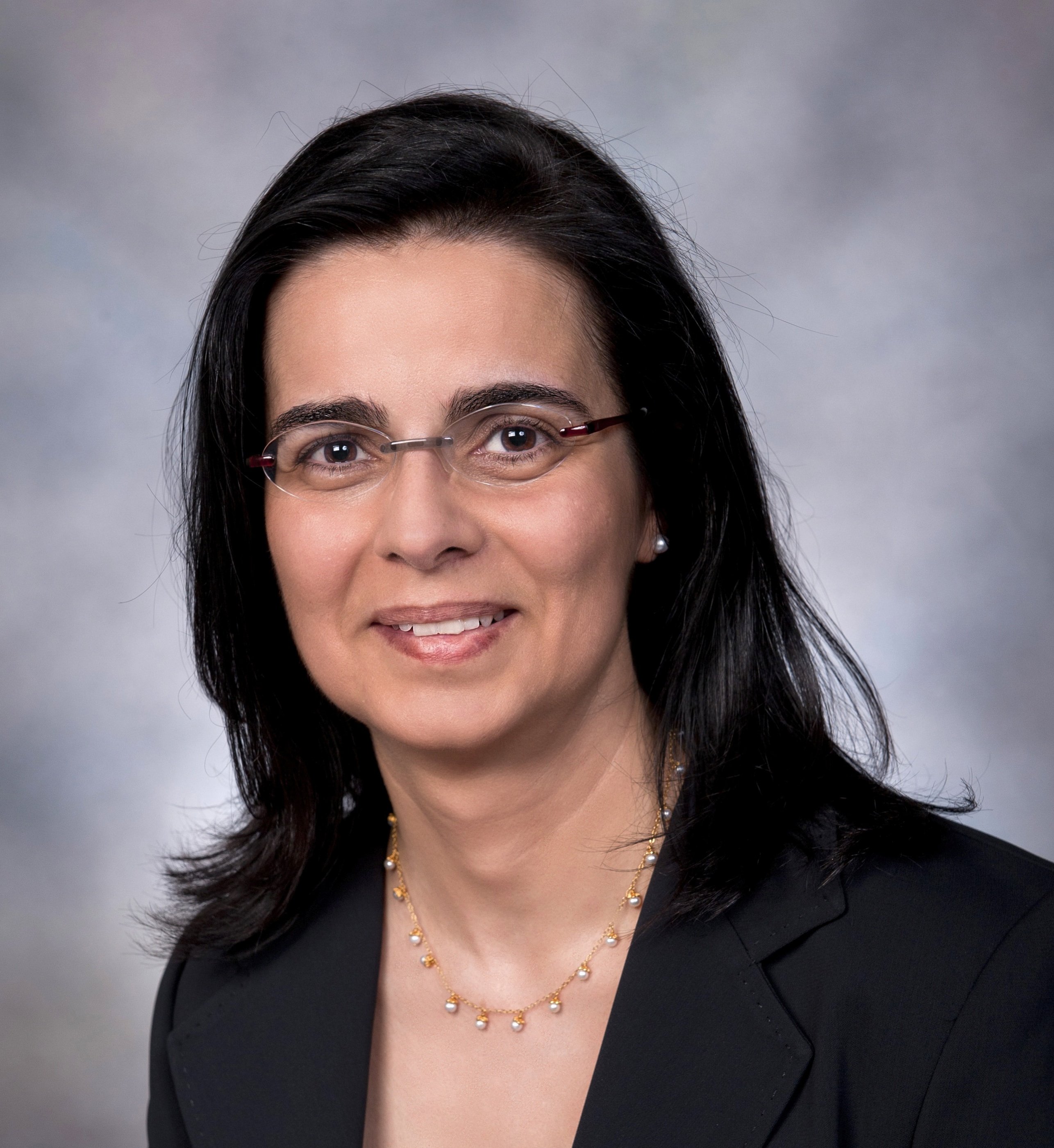
A picture that can used for seminar announcements is below: